
A Japanese security company has revived an old demonstration model that reveals something surprising: certain types of houses naturally attract burglars more than others.
Displayed at a security fair in Kyoto, the model places two homes side by side, allowing visitors to identify the details that make one property a perfect target and the other far less appealing.
See Also

According to Fukuyoshi Kondo, head of operations planning at Security House, burglars never act at random. They scout the area first, looking for vulnerabilities that make a break-in easy. High walls, tall hedges, and deep blind spots give criminals the cover they need.
Signs of absence
Signs of absence, like overflowing mailboxes or laundry left out too long, are additional clues that no one is home. In the first house of the model, every one of these red flags is clearly visible, making it an ideal target.
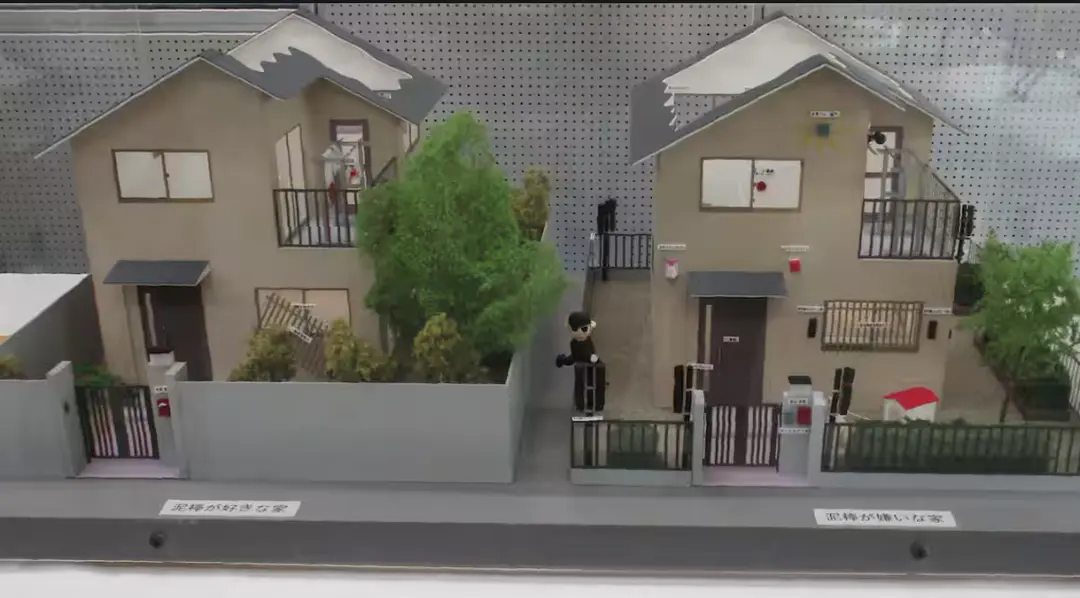
The second house demonstrates the opposite strategy. A low, open fence creates clear visibility from the street, increasing the chance that a suspicious intruder will be noticed. Motion detectors, infrared sensors, and other simple devices make the property much harder to approach discreetly.
Burglars still act mostly at night
The model was originally built about twenty years ago for police departments to use in public safety workshops. Despite its age, experts insist that its lessons remain accurate.
Burglars still act mostly at night, avoid noise, and abandon their attempt the moment an entry becomes difficult. The fundamentals of crime prevention, Kondo says, have not changed.
While the exhibition also showcased modern tools like facial recognition, connected apps, and night-vision cameras, the company’s goal was clear: to remind visitors that understanding these basic principles is essential—and to convince future customers to invest in better home security.